
Starting an RTMP reseller business involves more than simply purchasing streaming capacity and selling it to customers. A reseller needs a practical way to create customer accounts, assign streaming services, provide playback URLs and, as the business grows, automate account management and billing.
Modern RTMP reseller platforms can bring all of these functions together.
For hosting companies, developers and streaming providers interested in offering live video services under their own brand, understanding how the reseller structure works is important before building packages and setting prices.
Customers and Streaming Services Are Not the Same Thing
One of the first concepts a new RTMP reseller needs to understand is the difference between a customer account and a streaming service.
A customer is the person or organization purchasing streaming from the reseller.
The streaming service is the actual Live Streaming, TV Station or Video-On-Demand service assigned to that customer.
For example, one customer might require only a Live Streaming account, while another customer could require both Live Streaming and a TV Station service.
This distinction becomes particularly important when determining how many services are being used within a reseller package.
Creating Streaming Services for Customers
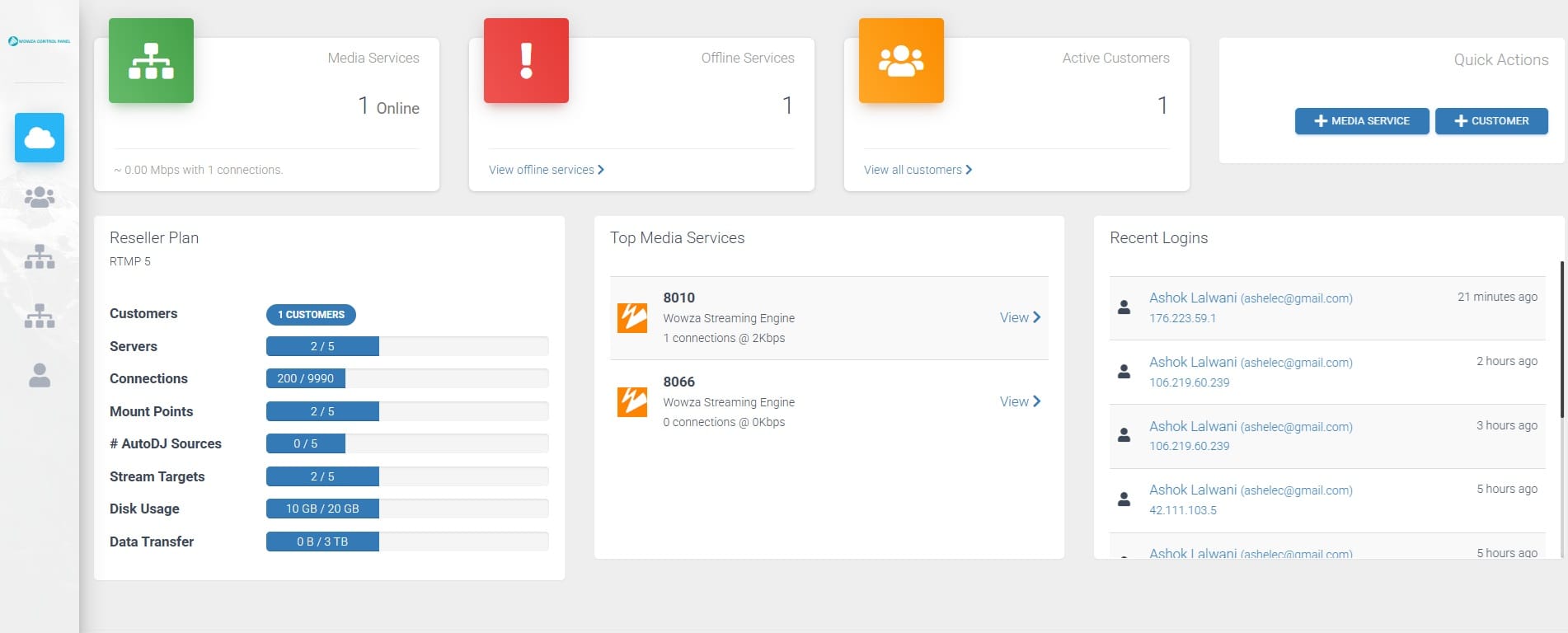
A reseller control panel should allow the reseller to create customers and then assign individual streaming services to them.
This makes it possible for the reseller to manage multiple customers from one central account while customers receive their own credentials and access to their assigned services.
When creating a new streaming service, the reseller selects which customer should own that service.
This structure is particularly useful for web hosting companies that want to add streaming to an existing portfolio of hosting, VPS or dedicated server products.
Live Streaming, TV Station and Video On-Demand
RTMP reseller hosting can be used for several different types of video delivery.
Live Streaming allows a customer to send a live RTMP feed from compatible broadcasting software or hardware encoders to the streaming server.
TV Station services are designed for continuous or scheduled broadcasting using previously uploaded MP4 video files.
Video On-Demand (VOD) allows individual uploaded videos to begin playback whenever a viewer requests them.
A reseller can therefore serve very different types of customers from the same underlying streaming platform.
From RTMP Ingest to HLS/M3U8 Playback
RTMP continues to be widely used for sending video from an encoder to a streaming server, while viewers commonly receive the resulting stream through HLS.
This means a broadcaster may send an RTMP stream into the server, while viewers watch through an HLS/M3U8 playback URL.
The M3U8 address can then be used with compatible web players, applications, Smart TVs and other HLS-capable devices.
This RTMP-to-HLS workflow allows traditional RTMP broadcasting tools to work with modern browser and device playback.
Using FFmpeg with an RTMP Reseller Service
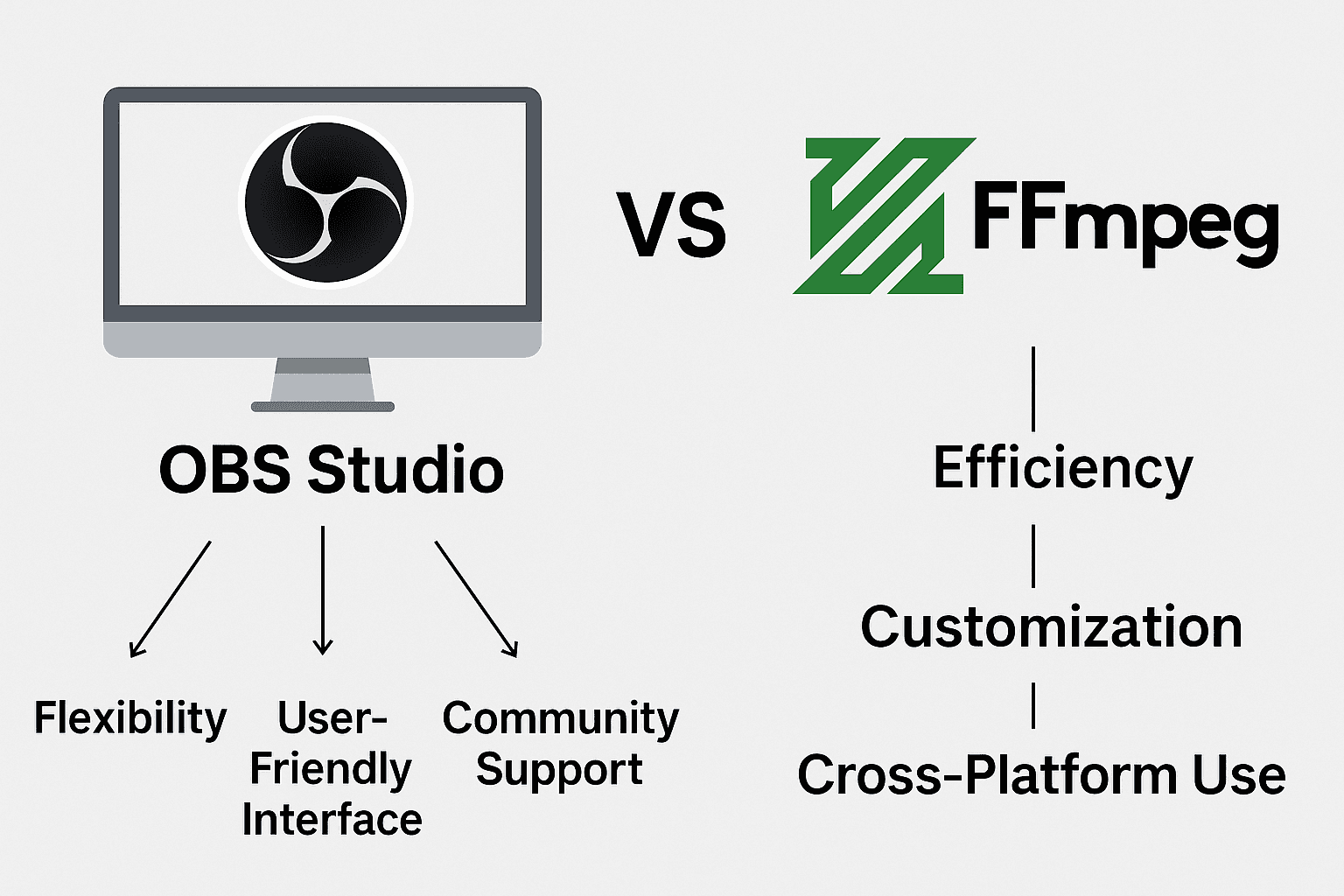
FFmpeg can also form part of an RTMP streaming workflow.
Depending on the application, FFmpeg can be used for tasks such as encoding, transcoding, processing prerecorded content or publishing an RTMP stream to a streaming server.
Other software and hardware RTMP encoders can perform the publishing function as well.
The streaming server then handles distribution and provides the appropriate playback output to viewers.
Automating an RTMP Reseller Business with WHMCS
For a reseller with only a few customers, manually creating and managing streaming services may be perfectly practical.
Once the business begins to grow, however, automation becomes considerably more important.
A WHMCS integration can connect the billing system with the streaming reseller platform.
This allows a hosting provider to create its own streaming products and packages inside WHMCS and automate important account-management functions such as:
- Creating a streaming account after an order is paid
- Suspending a service when appropriate
- Terminating an account
- Managing customer services through the existing billing workflow
This makes RTMP streaming much easier to incorporate into an established web hosting business.
Instead of maintaining an entirely separate provisioning process for streaming customers, the reseller can integrate streaming products into the same system used for other hosting services.
A Practical RTMP Reseller Setup Guide
There are several details that become important when configuring a reseller account for the first time: where customers log in, how services are assigned to customers, where MP4 files are uploaded, how HLS/M3U8 playback addresses are obtained and how WHMCS automation works.
Red5Server has published a detailed step-by-step guide covering these areas.
Read the complete guide:
How to Set Up and Manage RTMP Reseller Customers with Red5Server
The guide explains the practical administration of a reseller account, including customer creation, service assignment, Live Streaming, TV Station, Video-On-Demand, HLS/M3U8 playback and WHMCS integration.
Building a Streaming Business Around RTMP
RTMP reseller hosting can be particularly attractive to existing hosting providers because much of the infrastructure can remain behind the scenes.
The reseller concentrates on finding customers, creating packages, setting retail prices and providing customer service, while the streaming platform provides the underlying delivery infrastructure.
Adding WHMCS automation makes the model even closer to conventional web hosting: customers can purchase streaming packages while much of the provisioning and account lifecycle is handled automatically.
For companies already familiar with web hosting and WHMCS, that can make RTMP streaming a natural additional service rather than an entirely separate business.